Not every URL needs shortening. A short link is worth using when at least one of these applies:
The channel is short on space. Social posts, SMS, push notifications, QR codes, and print materials all benefit from shorter URLs.
You need click tracking.If you don't control the destination's analytics, a short link is the only way to count clicks per campaign or channel.
You want branded links. A custom-domain short link (yourbrand.co/launch) builds more trust than a generic shortener domain.
The link needs a schedule or update. A redirect layer lets you set go-live dates, expire links after campaigns, or change the destination without resharing.
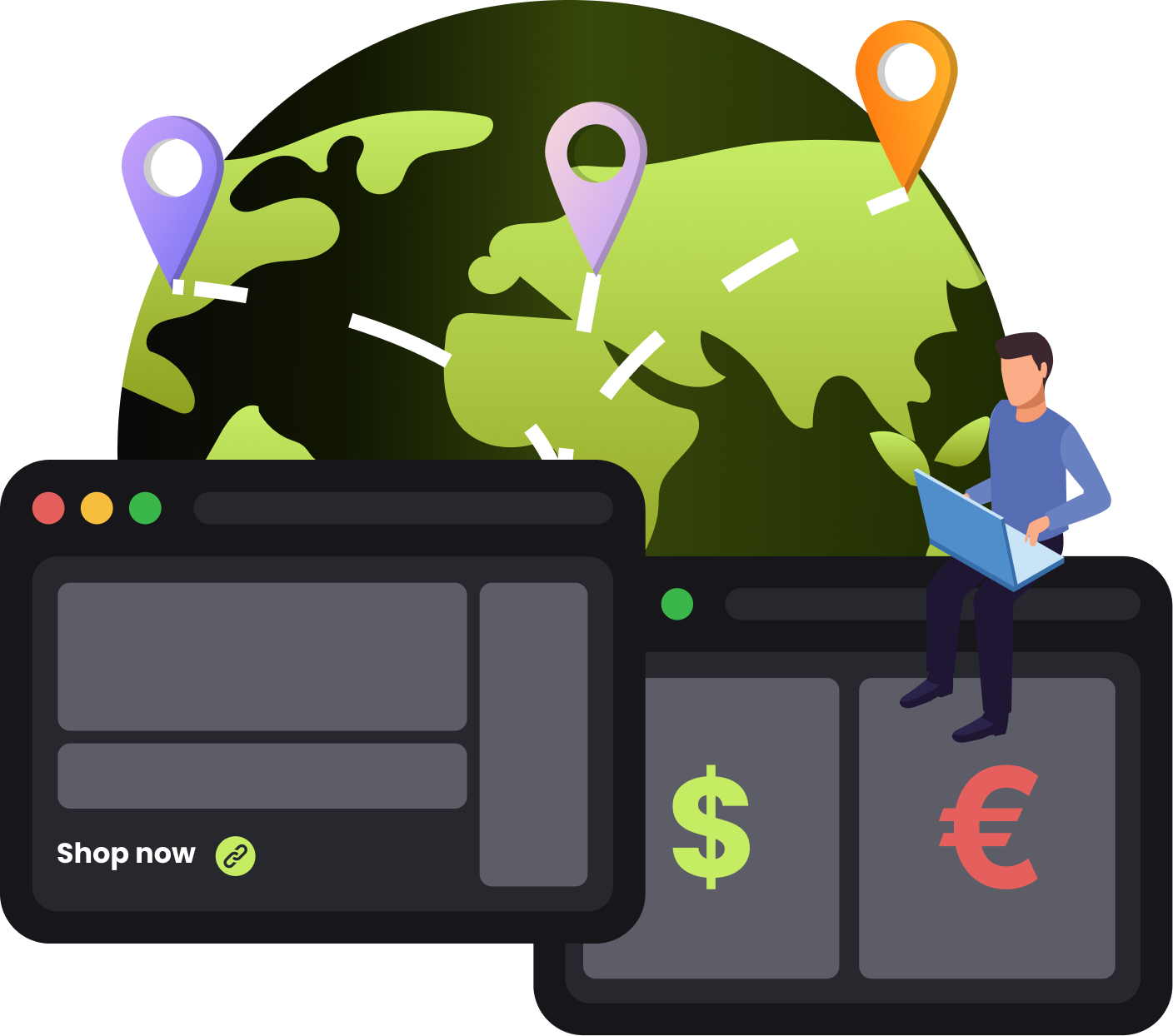
You're targeting multiple regions. Geo-targeting lets one link route visitors from different countries to different destinations — local language, local pricing, local store.
POPIA (South Africa), PDPA (Singapore), and others. Each has its own consent and disclosure rules.
A standard short link sends every visitor to the same destination. That works for a single-region campaign, but it breaks for international audiences.
A geo-targeted short link reads the visitor's IP at click time and routes them to the matching destination:
A visitor from the UK lands on the GBP-priced product page..
A visitor from Germany lands on the German-language version.
A visitor from the US lands on the US store with USD pricing.
Anyone outside your defined regions lands on a fallback page.
There are several benefits to using a link shortener or URL changer. Here are some of the top advantages:
Our address shortener is packed with features to help you work smarter.
Use your own domain (yourbrand.co/x) instead of a shared shortener service. A domain shortener keeps your brand visible in shared links and reduces the chance that spam filters block your URLs.
Define the part after the slash — /spring-sale instead of /x7Kp9. Easier to remember, easier to share, and clearer about where the link leads.
Map countries, regions, or cities to different destinations from the same short link. Useful for international campaigns, region-specific pricing, and language variants.
Track total clicks, unique clicks, referrers, geographic data, and device breakdowns per link. Use the data to compare which channels and creatives drive traffic.
Original UTM parameters and query strings forward to the destination, so your destination-side analytics stay intact.
Append paths to the short link (yourbrand.co/x/checkout) and have them forward to the matching path on the destination domain.
Set a go-live date, an expiry date, or both. Useful for launches and time-bound campaigns where you don't want to manage activation manually.
Generate multiple short links at once from a list — useful for affiliate programs, large campaigns, or product catalogs.
The basic process takes under a minute. Geo-targeting and custom domains add a few extra step:
Include UTM parameters if you have them — they'll forward to the destination.
Use the default shortener domain or connect your own (one-time DNS setup). Set a custom slug. Optional. If you skip it, the tool generates a random short slug.
Optional. If you skip it, the tool generates a random short slug.
Optional. Map countries or regions to alternative destinations. Set a fallback URL for unmatched visitors
Optional. Set go-live and expiry dates for time-bound links.
Copy the short link and use it across your channels. Click data starts populating immediately.
A short link is as safe as its destination. Reputable shorteners add HTTPS, malware scanning, and spam filtering, but the underlying destination is what matters. If you're uncertain about a short link, most shorteners offer a preview feature that shows the destination before you click through.
Short links are easier to read, easier to share, and easier to track. They fit channels with character limits, look cleaner in print and email, and give you a tracking and control layer that direct links don't.
Yes, with a one-time DNS setup. Pointing a domain (or subdomain) to the shortener lets you create branded short links on yourbrand.co/x instead of the default service domain.
Yes. The short link itself stays the same; update the destination in the dashboard, and future clicks go to the new URL. Useful for fixing broken links or redirecting expired campaigns.
A short link adds one redirect hop, which usually costs 50–200ms. For most use cases this is unnoticeable. For performance-critical flows, direct links may be preferable.
Not when used in marketing channels like social, email, or print. For internal links on your own website, use direct URLs — search engines prefer not to crawl through redirect chains.
"IP shortener" usually refers to a link shortener with IP-based geo-targeting. The redirect destination depends on the visitor's IP address and detected location.
The main difference is geo-routing. A standard URL shortener sends every click to the same destination. GeoPlugin's custom URL shortener can send each click to a different destination based on the visitor's location.